Successful brand launches require engagement and education of the treating physicians. But how do you best engage physicians? We recently surveyed general practitioners (GPs) and specialists to ask them some pertinent questions. Not surprisingly, interest in learning about new products is driven by potential improvements in long-term safety, efficacy, and quality of life. Lower on the list (but still important) are improvements in dosing and administration. Three-quarters of GPs (vs 55% of specialists) want to know about new products once they are approved and/or they have access. This is likely driven by the sheer volume of products and disease areas...
Engaging prescribers is a key component to the launch of any new brand. But what are the key components that drive interest for physicians in learning more? Overall, physicians express greater satisfaction when learning about new products through in person interactions compared to virtual or digital interactions. However, regardless of how they learn about new product, the types of resources physicians prefer are similar. The top most preferred resources for both GPs and Specialists include presentation at conferences, discussions with peers, educational events that include KOLs or treatment areas experts, presentations by lead authors, journal clubs and discussions with Pharmaceutical...
The COVID-19 pandemic had a significant impact on physicians, including how they learn about and integrate new products into their practice. While not all saw a decline, close to 1 in 3 Specialists and close to half of GPs say their use of newly launched products declined during the pandemic, primarily due to a lack of pharma presence, reduced patient volumes overall and just a general lack of comfort using new products....
We surveyed 152 physicians in the U.S. to gauge their opinions on Patient Support Program (PSPs) providers during the pandemic. Physicians surveyed include GPs, Hematologists, Medical Oncologists, Rheumatologists, Pulmonologists, Endocrinologists and Infectious Disease Specialists. Overall perceptions of PSPs compared to before the pandemic have generally improved – especially in terms of responsiveness and the expertise of individuals working on PSPs....
PSPs play a significant role in ensuring that patients have the best possible experience during their journey – especially in specialty therapeutic areas where treatments tend to be more expensive. The pandemic has made it more challenging for patients to access support and services for their medical conditions. This has put additional pressure on company-sponsored PSPs to further enhance their offerings to help patients in the best way possible. PSPs have become increasingly important for patients since the onset of the COVID-19 pandemic and as a result now have an even more significant influence on physicians’ treatment selection process. For...
Physicians feel positive about how Patient Support Programs (PSPs) have evolved in the past two years – especially in terms of responsiveness and the expertise of individuals working on PSPs. The main unmet needs at this time remain the range of service hours and the availabilityof nurses remotely (either by phone or virtually). Many specialists believe that biosimilar PSP providers have struggled more than originator drug PSPs since the onset of the pandemic – mainly because of they do not have as many employees and offer a smaller range of services....
Patient Support Programs (PSPs) play a significant role in ensuring that patients have the best possible experience during their journey – especially in specialty therapeutic areas where treatments tend to be more expensive. The COVID-19 pandemic has made it more challenging for patients to access support and services for their medical conditions. This has put additional pressure on company-sponsored PSPs to further enhance their offerings to help patients in the best way possible. PSPs have become increasingly important for patients since the onset of the COVID-19 pandemic and as a result now have an even more significant influence on physicians’...
The COVID-19 crisis changed the way people work across industries including the pharma industry. MD Analytics teamed up with the professional association for women in the pharma industry Women Leaders in Pharma to conduct a study on the impact on of COVID-19 on women who work in the pharma industry....
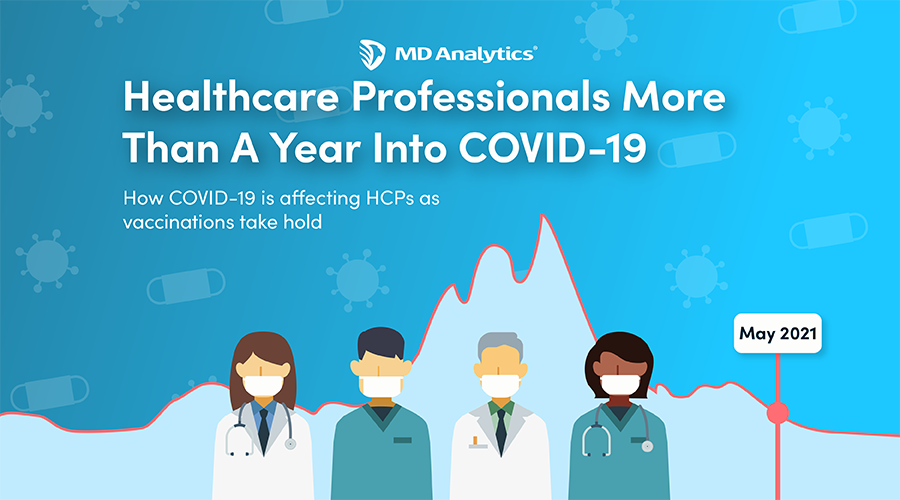
As the COVID-19 vaccination campaign ramped up in the Spring, and rates of infection dropped, a return to normality appeared to be on the horizon. However, with widespread vaccine hesitancy paired with the virulent spread of the delta variant, we are once again left with an uncertain view of the future. Throughout the past year, MD Analytics has been monitoring the effects of this uncertainty, and the pandemic in general, on the practices and perceptions of HCPs. Ongoing changes in workloads, patient assessments, and interactions with pharma have had direct and meaningful impact on the healthcare industry....
The COVID-19 vaccination campaign is underway in Canada. However, the pandemic has significantly altered HCPs' practices to date. These changes have impacted workloads, patient assessments, and interactions with pharma. A year into the pandemic, a national COVID-19 vaccination campaign is underway. This begs the question, how are Canadian HCPs doing today? What do they foresee moving forward? Our latest short survey presents the current state of HCPs' practices in Canada and their assessment of the government's management of COVID-19....
Virtual medical conferences are on the rise, but are they here to stay? As a result of the pandemic over the past year, conference organizers and medical brands were set scrambling to find a solution to limit cancelations of key medical conferences. Resulting virtual platforms advanced quickly to emulate the face-to-face conference experience through a digital means. While many virtual medical conferences were successful, in terms of strong participation levels to many key events both national and international, questions remained as to how well they met the needs of physicians, other healthcare providers and the pharmaceutical and medical device companies...
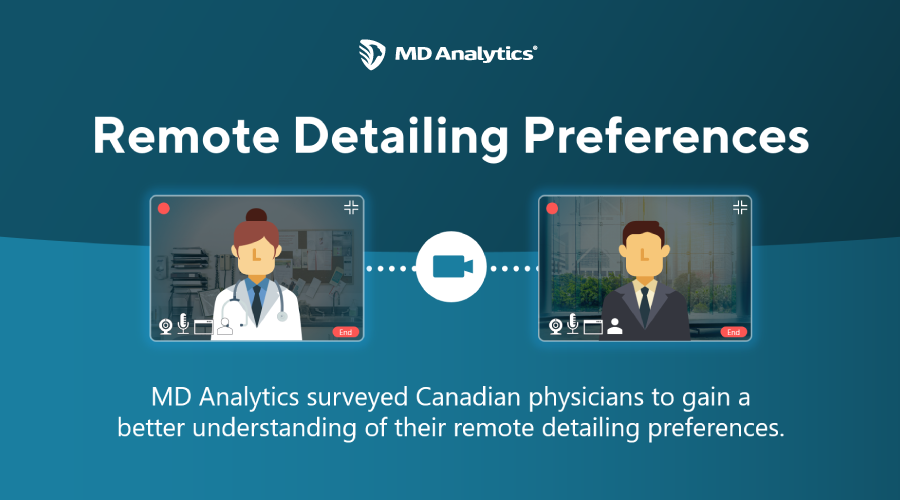
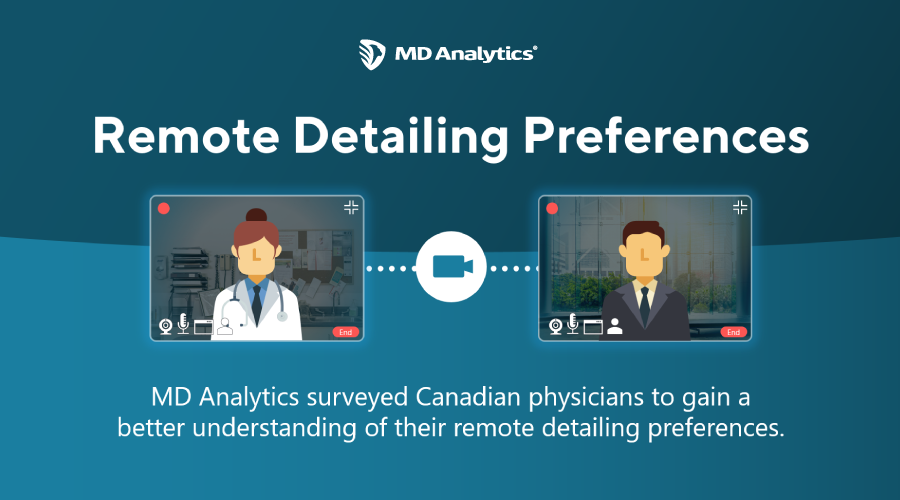
The detailing of healthcare providers through virtual means has become a staple for pharmaceutical brands and is essential for any go-to-market strategy. When face-to-face detailing was put on hold this past year, healthcare providers began experiencing an even greater volume of requests for virtual interactions. For pharma brand teams, ensuring your approach to digital communications matches with the preferences of providers is important in helping your messages get through to your target prescribers. In our latest quick poll, conducted in March 2021, MD Analytics sought to gain clarity around current remote detailing preferences and identify the components of an “ideal”...
Each year, providers and health industry professionals travel from locations around the world to share and discuss the latest developments in medical care. For several years now, conferences have been experimenting with digital features that allow participants to engage remotely, avoiding the burdens of travel. However, the scope of content available to digital participants had often been limited and physician adoption was low....
Our 5-minute online survey conducted in the fall of 2020 sought to gain clarity around remote detailing. This study was conducted with 339 Canadian physicians who are members of the MD Analytics healthcare panel and the results provide actionable recommendations on how to form a more 'ideal' pharma remote detail....
The COVID-19 crisis has significantly impacted physicians’ practices; but how and to what extent? Physicians have been managing significant workloads, while learning on the fly how to navigate and setup virtual meetings. Maintaining high levels of patient care while minimizing in-person interactions has also been challenging....
Strong online advertising and messaging are key to maximizing impact of any marketing campaign. With recent restrictions on in-person interactions, online advertising and messaging play an even greater role in reaching physicians. Our findings from a survey of n=227 Canadian physicians show that 82% of Canadian physicians have increased their use of online platforms as a result of COVID-19, 48% significantly so....
Physicians recognize that new medications often can be quite valuable for their patients and are eager to add them to their armamentarium. However, they do not always end up prescribing these new medications as much as they initially plan or as early as they would like. There are many reasons that can explain this discrepancy....
In October 2018, the use of recreational cannabis was legalized across Canada. Looking back at the past year, physicians remain divided in their views towards this new legislation, though support skews towards younger GPs. This legislation has impacted the use of prescription treatments and patient visits in a number of key therapeutic areas, though not to the degree that was anticipated 12 months ago....
Ready to explore how data-driven insights can accelerate your pharmaceutical research? Connect with our team to discuss your goals.
We use cookies to collect information to help us personalize your experience and improve the functionality and performance of our site. By continuing to use our site, you consent to our use of cookies. For more information, see our Cookies Policy.